Showing posts with label Star Trek Season 2. Show all posts

Wednesday, August 6, 2014

Star Trek 2x26 "Assignment: Earth"

rating: ***
Memory Alpha summary

"Assignment: Earth" may be the most interesting piece of Star Trek trivia ever.  If it had succeeded in what it set out to do, Star Trek as we know it wouldn't exist.

By the end of the second season, the series was on the brink of cancellation.  It seemed even Gene Roddenberry was resigned to that fact.  He originally pitched this episode as the pilot of a completely new series.  Instead it became the season finale.  That's why it seems to be such a dramatic departure from virtually every other episode ever.  It's about as standalone as you can get, but it's of significantly higher quality than usual, because of course at that point being a standalone episode was par for the course.

Enter: Gary Seven.  Basically a human drafted into being an agent of an alien species, Central Intelligence Aliens if you will.  "Assignment: Earth" is very blatantly far more his story than our crew's.  The first and last time that ever happened.  If he'd ever appeared again, I might have been given the excuse to recommend it on all four of my qualifiers and therefore certify it as a classic.  I contend that the episode could very easily inspire more onscreen material.  If and when that happens, consider the upgrade immediate.
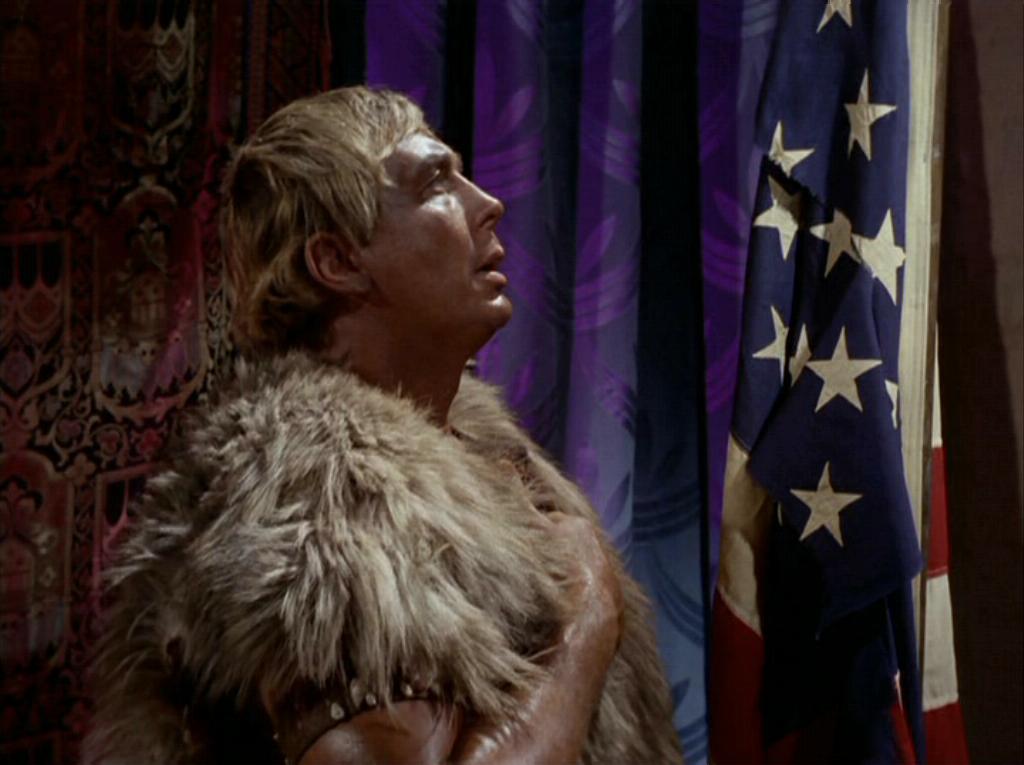
via Trek Core.  And he kind of looks like Gene, too.

Gary's mission was to stop humans from crossing the brink of nuclear war.  He succeeds, by the way.

Our crew does factor into the episode.  The other great distinction of "Assignment: Earth" is that it's the only casual instance of time travel in franchise history.  The crew visits 1968 in order to resolve a riddle in the records.  Later franchise lore would establish Starfleet having, y'know, rules about time travel, but that doesn't exist yet.

All around, this is a fascinating episode.  If this is the first time you hear about it, then consider yourself initiated.  There are comic books and prose books that feature Gary Seven, but of course he never again appeared onscreen.  If Star Trek had turned into a Gary Seven experience, we certainly wouldn't have anything that we know today.  The third season, although routinely creatively maligned, gave fans probably a better experience than they'd had in the latter third of the second season, but more importantly a full extra season to remind them of why they loved the series to begin with, and it looked nothing like Gary Seven.

But watch this episode and ask yourself, this guy could have developed into a cult phenomenon, too, couldn't he?  And chances are if he'd stuck around, Kirk would have come back eventually too, right?

Anyway, that's speculation.  Take it for what it's worth.  Bottom line is, even if you know none of what might have happened, "Assignment: Earth" is a unique experience, a standout episode, one that turned around the fortunes of the late second season at the very last moment, and even on that note probably helped invigorate the creators for the final season.  And that's worth celebrating, too.

four quarter analysis
franchise * series * essential * character

notable guest-stars:
Terri Garr
Barbara Babcock

Tuesday, August 5, 2014

Star Trek 2x25 "Bread and Circuses"

rating: *
Memory Alpha summary

Just through the sheer repetition of Kirk being forced to literally fight for his survival, this is either one too many or perhaps the tipping point in making it a legitimate trope in the series (and franchise, as in Voyager's "The Fight" and "Tsunkatse" and Deep Space Nine's "In Purgatory's Shadow"/"By Inferno's Light").

Anyway, "Bread and Circuses" also continues the gimmick of doing every story type in existence, this time the Roman Empire, just because.
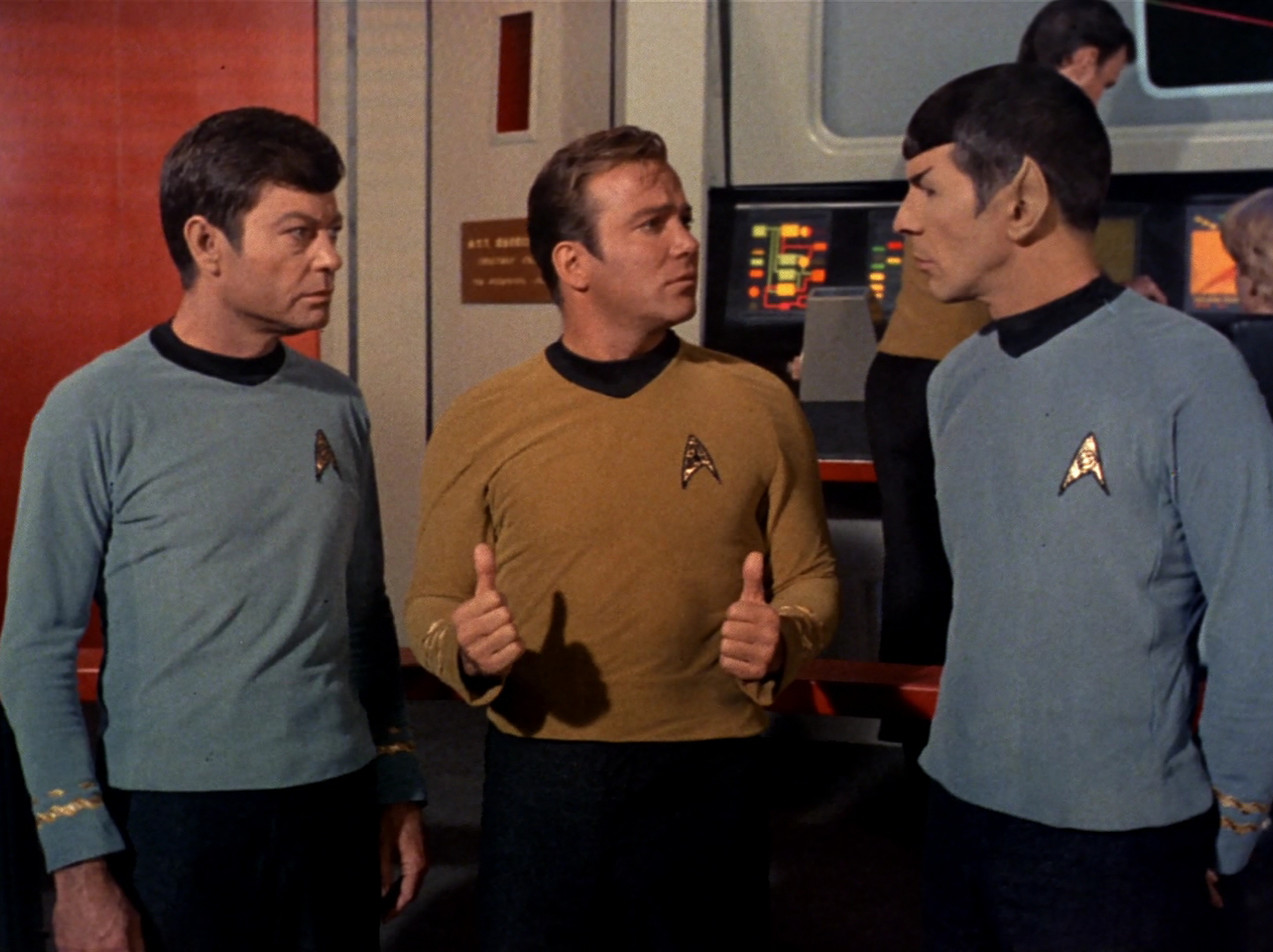
via Star Trek
I don't have a ton to say about this one.  It is what it is.  Take it or leave it.  As I've been saying, clearly the writers had become exhausted by the end of the season.  They were just throwing whatever they wanted at the screen, the total reverse of how it had begun, richly exploring the bugging mythology.  This is the opposite.  The complete opposite, especially as compared to "A Piece of the Action."

An oblique reference to Christianity, extremely rare in any Star Trek incarnation, may be the one notable element of the episode.  Until DS9 faith and/or religion never got much positive press, as it were, in the franchise.  That was a decision Gene Roddenberry made about humanity's future.  (Now if this had been the whole point of the episode, we'd be having a different discussion.  Incidentally, original Pike actor and series lead Jeffrey Hunter played Jesus in King of Kings.)

four quarter analysis
franchise * series * essential * character

Friday, August 1, 2014

Star Trek 2x24 "The Ultimate Computer"

rating: **
Memory Alpha summary

An episode that bucks the late second season trend, "The Ultimate Computer" ended up creating a franchise legend in Richard Daystrom thanks to the later Daystrom Institute from Next Generation.  It might be argued that the same series benefited more directly from the events of this episode, which explored the upper reaches of artificial intelligence.
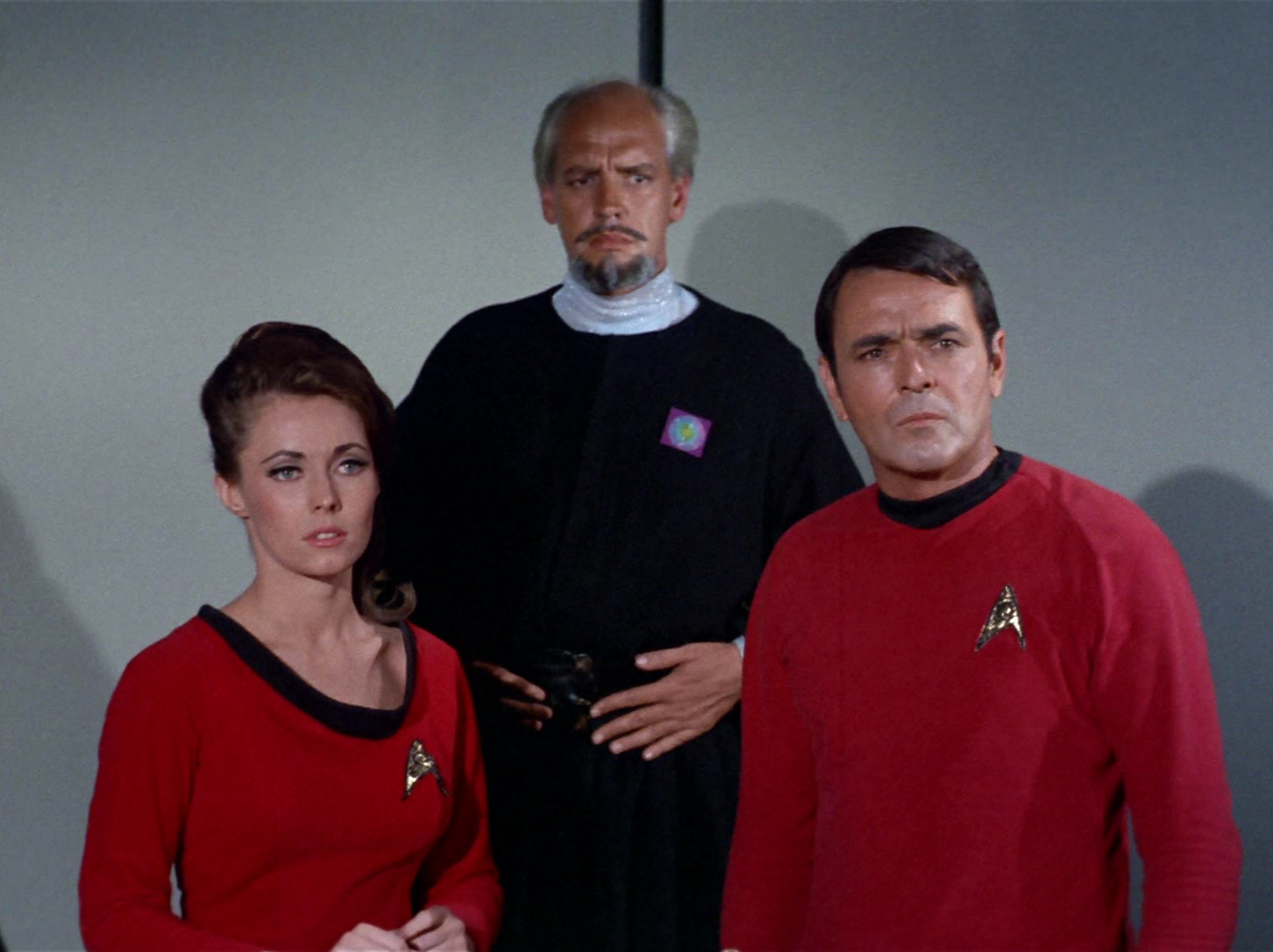
via The Viewscreen.  You're... -A legend.  Yes I am.
Although Daystrom fares poorly in the episode (this is basically the worst experience of his life), which is basically how we meet everyone who isn't named James T. Kirk, his reputation and legacy prior to these events serve as an important building block.  He also happens to represent our continuing fears about what advanced technology will do if left unchecked (apocalypse! so sayeth Terminator!  The Matrix!  Johnny Depp!).

This is the guy who dares suggest a computer can do a better job than Kirk.  Clearly not!  But then later we have Data.  Sure, and the Borg.  It just goes to show that even in the future, humans have the same fears.  It's pretty interesting stuff.

four quarter analysis
franchise * series * essential * character

Thursday, July 31, 2014

Star Trek 2x23 "The Omega Glory"

rating: *
Memory Alpha summary

This is one of the earliest drafted stories of the series, originally in consideration to have become the second pilot.  Consequently, having sat around for nearly two seasons, its impact is significantly diminished after multiple episodes and different scenarios, not to mention the introduction of the iconic Romulans and Klingons, explored its Cold War parallels before "The Omega Glory" finally became reality.

So there's that.  There are also parallels to later franchise stories, perhaps most significantly Star Trek: Insurrection with its Fountain of Youth, as well Voyager's "Resolutions" and even "Basics," about Starfleet officers becoming marooned on alien worlds, either for their health or simply among relatively primitive natives.

I could expound on any of these topics if you'd like, but the fact remains that this episode's real legacy is being part of a string of episodes that saw the second season lose all of its momentum.  Doubtless reason enough for the network to have considered cancelling the series.  Without its greatest inspirations, Star Trek might be considered very disposable indeed, no matter how memorable it intrinsically was, how inspired, how iconic.  And "Omega Glory" takes a very circuitous route to embodying everything that went wrong and nearly ended the journey before it had properly begun.

So there's that.
via Strangers and Aliens
The episode also features one of two instances where the series attempted to address the plight of Native Americans.  This was far more obvious, of course, in "The Paradise Syndrome" only a handful of episodes later, early in the third season.  Perhaps another argument that the series seemed to have already run its natural course by the time it was cancelled.

One last element worth mentioning: Although typically any other Starfleet crew besides Kirk's met a quick and sticky end, it was always worth noting that there did, in fact, exist other crews.  So the presence of such in this episode is notable.  As such.

Incidentally, if you find you have no memory of "The Omega Glory" other than perhaps its distinctive title, now you know why.  And "omega" in this instance refers to the alien planet-of-the-week, not so much a magic particle that would later fascinate the Borg...

four quarter analysis
franchise * series * essential * character

Wednesday, July 30, 2014

Star Trek 2x22 "By Any Other Name"

rating: *
Memory Alpha summary

Somewhat suspiciously, the way this episode ends is very similar to "Return to Tomorrow" as a whole just a few episodes earlier.  Creatively, the season ended much more weakly than it'd begun.  That's okay.  Fans still argue that it's the best season in franchise history.

Speaking of the franchise as a whole, that's really the only thing worth talking about "By Any Other Name."  Sometimes a setup is better than the seemingly contractual additional conflict that is tacked on to complicate it.  This happens.  It spoiled Enterprise's "The Catwalk," too.  The setup is actually a kind of prototype for Voyager.  And that's pretty interesting.

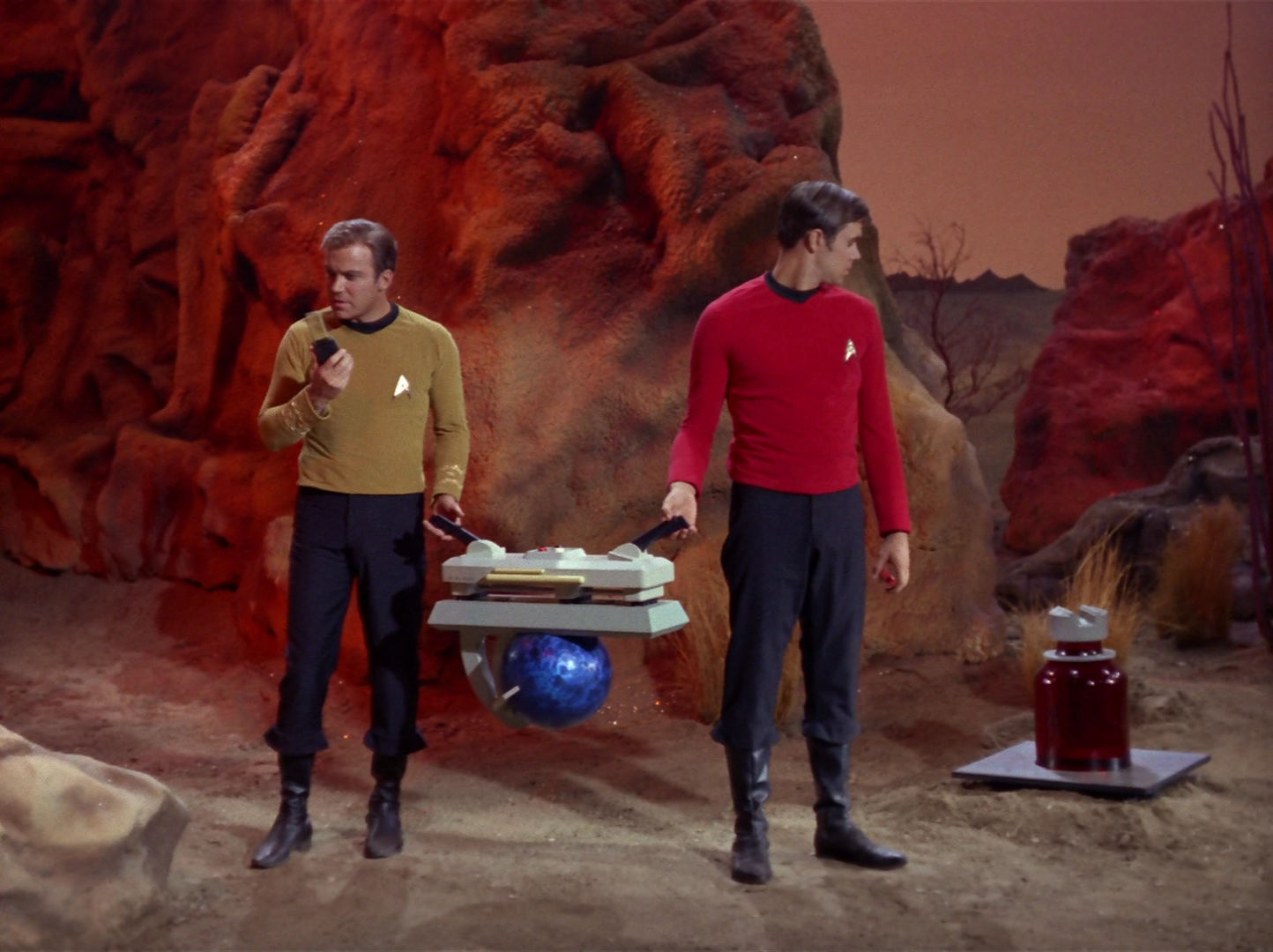
via Star Trek Prop Authority. Show mine if you show yours.
At its heart, "Other Name" is about an alien ship just trying to get home.  Granted, a new home.  (So, like the Sphere Builders from Enterprise.)  But home all the same.  Imagine if Janeway had gone about demanding whoever she came across give their home to her.  Colonization by way of conquest.  (Hey, North America knows a thing or two about that.  Come to think of it, it's a little surprising that this episode didn't think of that.)

But you can probably skip it.  I was going to give the episode no stars at all, but decided there were a few useful associations to be found.  Aside from those, though, not much worth watching here.

four quarter analysis
franchise * series * essential * character

notable guest-stars:
Majel Roddenberry


Friday, July 25, 2014

Star Trek 2x21 "Patterns of Force"

rating: **
Memory Alpha summary

It should be remembered that in 1968, when "Patterns of Force" was originally broadcast, WWII was a memory from a little over twenty years in the past.  A little over twenty years ago as of the writing of this review, 2014, the Cold War came to an end, and we still don't have ideal relations with Russia (to perhaps put it mildly).  So to have a Nazi episode at that time (and I still can't adequately reconcile a sitcom like Hogan's Heroes, which would have been in its third season at the time) would have been something like a bold gesture on the part of the series.

The episode is an allegory of the classic adage concerning those who fail to learn from history.  A Federation historian actually thinks it's a good idea to base the working conditions of a whole culture on the Third Reich.  Things go horribly wrong, and so we get literal Space Nazis.
via Trek Core
I've stated in other reviews that the series seemed hellbent on exploring all the typical story templates of its day, and maybe that's why there's a Nazi episode.  But then, maybe it was important to the mindset of the show's creators to do this, the way it was equally important, say, to constantly relay the message that War Is Bad.

Nazis became a recurring staple in the franchise.  Voyager's "The Killing Game" revisited them in a holodeck setting.  Enterprise's "Storm Front" saw the conclusion of its Temporal Cold War arc in this context.  Taken as a whole, that's a whole legacy, and I would submit an important one.

On its own, is "Patterns" a truly notable episode?  Or is it merely something that from a distance looks like a story told in poor taste?  It's certainly striking, easily identifiable from some of the more anonymous adventures.

I think it's worth considering.  And that's as much an argument for watching an episode as you can find.

four quarter analysis
franchise * series * essential * character

Thursday, July 24, 2014

Star Trek 2x20 "Return to Tomorrow"

rating: **
Memory Alpha summary

Callbacks I can think of: Next Generation's "Power Play," Deep Space Nine's "The Passenger," Voyager's "Vis a Vis" and "Demon" (with its sequel "Course: Oblivion"), and Enterprise's "Observer Effect."

The idea of body-hopping, borrowing someone else's body.  That's what "Return to Tomorrow" is all about.  It's pretty interesting in this original incarnation.  There's even a prototype for Kirk's "Risk is part of the game" quote from Generations.
via Trek Caps. Not a young Dr. Pulaski.  But the same actress.
A fun episode.  I'm bumping the rating up by one star from what I originally gave it, just because it's a good representation of the series and a clear predecessor for something that franchise did in abundance (clearly not all classics, but they were all interesting).  At its core Star Trek, and certainly its original incarnation, is about visiting different sci-fi concepts every week.  Sometimes the execution is better than other times.

And sure, it must be noted that the title is hardly a memorable, descriptive, or even evocative one, poetic in a very roundabout way.  So that'll be one reason you probably don't remember it.  But all told, you probably should.

four quarter analysis
franchise * series * essential * character

notable quest-stars:
Diana Muldaur
Majel Roddenberry

Wednesday, July 23, 2014

Star Trek 2x19 "A Private Little War"

rating: *
Memory Alpha summary

So this is a War Is Bad episode.  Perhaps you might have heard this philosophy.  It's also a Cold War episode.  It's also a Klingon episode.

But at its core, "A Private Little War" might best be considered a Kirk episode.  In a later era, maybe that might have been executed more clearly, left an actual impact on our captain.  As such, it's another conflict-of-the-week story and so I won't stress it's importance too much, but that's still the best way to view it from a later perspective.

via Trek Caps
Every so often, the series had a look at what our characters were up to in their pasts.  Not directly.  Revisiting something they'd done or been involved in previously.  The stories never really got more involved than that.  These stories were always treated as a mere starting point.  Just something that happened that happens to be associated with something that's happening now.  That sort of thing.  Which is fine.  In this case, this actually works slightly better than usual, it should be noted.

Kirk previously visited this particular world earlier in his career, and so developed a friendship with one of the locals.  It's unfortunate, but emblematic of what Starfleet is supposed to be about, that this encounter was with someone who can be described as comparatively primitive (which also helped with the costume budget), a world that is not part of the Federation but capable of dealing openly with it.  (I think a real case could be made for a series that approaches this from in a much more direct way, sort of like Deep Space Nine but as a ship-based adventure, digging in deeply with every mission).

Anyway, Kirk comes back to discover that things have not improved in his absence.  It's a "revisit" story that's arguably better than Wrath of Khan.  At least Kirk knows where he's going and who he's going to meet!

Oh, and there's an alien who looks like an alien!  The Mugato!
via The Viewscreen
Less famous than the Gorn but arguably more essential to his episode, he's also got a giant horn on his head, and more spikes on his back.  So there's that.  If a movie were ever made of the episode, or the whole story redone in some other format, this is a part of it that could become a lot more interesting.  (Oh no!  I'm coming up with ideas!)

Among minor episodes, you could easily sample this one and get a good sense of what generally makes the series interesting.

four quarter analysis
franchise * series * essential * character

Thursday, July 17, 2014

Star Trek 2x18 "The Immunity Syndrome"

rating: *
Memory Alpha summary

The most memorable element of this episode, which otherwise serves as a template for any number of other later episodes where the given crew must pull their ship through a given cosmic crisis (so vague you otherwise know it's fairly basic, generic Star Trek storytelling), is a Starfleet ship with an entirely Vulcan crew.
via Space Doubt
Not that you see them.  As Armchair Squid pointed out, there's a remarkable similarity to how Spock experiences the destruction of this ship and Obi-Wan Kenobi senses the destruction of Alderaan in Star Wars.

While the second season as a whole did a great deal of work establishing firm continuity for the series (and later franchise), this Vulcan crew remains an anomaly that was never really explained.  Are we to believe that Starfleet has ships populated by different member species of the Federation?  So much had always been made of Spock's singular status as a Vulcan in Starfleet, but this episode suggests that it's more that he serves among humans rather than among his own kind.  Who knows?  Best not to think about?

Other than that, "The Immunity Syndrome" is an episode that presents a giant crisis our crew just happens to be able to solve.  Not exactly subtle storytelling, nor highlight of the season or series.  But it's also very typical of the series, and indeed franchise.  But maybe don't think of it in that way.  If you can.  Basically the template for technobabble episodes to come.

four quarter analysis
franchise * series * essential * character

Friday, July 11, 2014

Star Trek 2x17 "A Piece of the Action"

rating: ****
Memory Alpha summary

This is about as close as the season came to matching "The Trouble with Tribbles" for sheer enjoyment factor.  Like "Trouble," "A Piece of the Action" has endured as a classic, and rightfully so.

Perhaps too often, the series dipped into the well of story types that would have been familiar to audiences at the time.  Hence, the gangster episode.  It makes no sense otherwise, a civilization somehow corrupted by exposure to a book (that...probably wouldn't really happen, unless we're talking about a completely different kind of book), but once you accept the gimmick for what it is, it becomes one of the more distinctive versions of the kind of story the series tried to tell on multiple occasions: a contaminated culture that Kirk has to try and clean up.

It's also a Prime Directive episode, not in the sense that it's Kirk bending the rules (this time), but the result of our own people having screwed up in the past (reasonable speculation has it as being the crew of the Horizon as featured in Enterprise, as featured in the episode "Horizon").

Like "Trouble," it features Kirk being able to let loose a little.  He determines that the best way to approach the problem is to assimilate into the culture so as to not further expose the natives to things they shouldn't know about (such as Starfleet).  This is fun to watch, classic Kirk all around.  Again, completely ludicrous, but in a good way.  One gets the sense that if Kirk had it his way, this is what he'd be doing all the time.  James Bond, in a sense, by way of Jacques Clousseau.
via Kethinov

Ironically, the end of the episode features another contamination, McCoy leaving his communicator behind (which becomes the inspiration for another Enterprise episode, "The Communicator;" it's not your imagination, that series titled its episodes pretty literally).

Next Generation brought gangsters back to the franchise thanks to Picard's obsession with Dixon Hill.  But that was done on the holodeck.

four quarter analysis
franchise * series * essential * character

Thursday, July 10, 2014

Star trek 2x16 "The Gamesters of Triskelion"

rating: *
Memory Alpha summary

This is a pretty generic episode for the series, one made less significant as the franchise expanded (the Voyager entry "Tsunkatse," for instance, is better, as are numerous other examples; although it could be done far worse, such as "Code of Honor" from Next Generation).  Kirk and a few others are taken prisoner on an alien world and forced to become combatants in an arena.  (Which is completely different from, say, "Arena.")

via Trek Core


The main draw is the latest disagreement between Spock and McCoy as to how to proceed.  It'd been done before, and would be done again, at its best, in "The Tholian Web" next season, but the fact of its recurrence is the best way to recommend watching the episode.  Otherwise take it or leave it.  In some ways, an episode you really ought to just skip if you really want to.

There's an Andorian in there, if you want to watch for that.

four quarter analysis
franchise * series * essential * character

Wednesday, July 9, 2014

Star Trek 2x15 "The Trouble with Tribbles"

rating: ****
Memory Alpha summary

I think everyone knows about this one.  It's one of the rare episodes from the series to receive sequels ("More Tribbles, More Troubles" from The Animated Series, "Trials and Tribble-ations" from Deep Space Nine).  It's a classic.  I don't really need to justify that statement.

The question is, is the legacy of "The Trouble with Tribbles" a positive one for new fans to consider?  So often, when that question is raised, it's with episodes existing fans thought rubbed them the wrong way.
via Crackerjac Jane
The thing is, it's a great episode for fans.  It's easy to love, very lighthearted, not in the sense that it doesn't take itself seriously, but that it's hard to be inundated with all those Tribbles and take a different tone.  It's instantly iconic.  It's basically the peak of the whole second season, everything the creators wanted to accomplish encapsulated in a single episode.  The minor characters have significant moments (it's Uhura who's responsible for spreading Cyrano Jones' "harmless" creatures; and this is the episode where Scotty and Chekov defend Kirk and or the Enterprise's honor: "But you heard what he called the keptin!"  "Laddie, don't you think you should...rephrase that?").  The Klingons are involved.  The story is presented as a dynamic representation of what the Federation is and how Starfleet is involved.

Yet...it's kind of silly, isn't it?  How is a casual fan supposed to take it seriously?  One imagines that a viewer coming across it in 1967 might have determined that this series was just a bunch of nonsense anyway.  The thing is, Star Trek as we know it now literally would not exist without it.  Chris Pine's Kirk is exactly the Kirk we find in "Trouble."  William Shatner tended to take a sober approach to the character, except in this episode, where he wears a perpetual bemused expression.

"Trouble" is what the new movies are, to some extent.  It's not what most of the series, or indeed franchise, actually is.  I think I like the lighthearted tone, though, but balanced, the way J.J. Abrams approached it.  "Trouble" is what you get when everything matches the dynamic Kirk and Spock and McCoy have been striking all along.  It's the tone matching the main characters for a change.  And it's arguably the best episode of the series because of it.

And yes, that's one of the iconic Klingons present and accounted for, Koloth, one of the three who later reappear in DS9.  What more can you ask for?

four quarter analysis
franchise * series * essential * character

notable guest-stars:
William Campbell
Charlie Brill
Stanley Adams

Thursday, July 3, 2014

Star Trek 2x14 "Wolf in the Fold"

rating: *
Memory Alpha summary

"Wolf in the Fold" is perhaps the only Scotty episode of the whole series.  Of course, it's probably better understood to be a Jack the Ripper episode.

Until I think Patricia Cornwell's book Portrait of a Killer, Jack the Ripper endured as an endless subject of intrigue for a serial killer who thrived in late 19th century London, never to be identified.  His legacy has no doubt informed our continuing interest in serial killer, but he's finally faded, at least a little, from the popular imagination.

Back in the '60s, not so much.  In Star Trek's relentless march at covering every popular story type of that type, of course he popped up.  It's a shame that Scotty's only spotlight had to be this, because there's really nothing much intrinsic to Scotty himself about the episode.  In the end, there are a long string of episodes about main characters throughout the franchise wrongfully accused of murder.  This is not such a memorable start to that string.

via Kethinov
The images Google suggested more heavily involved women with far less clothing on them.  You will have to settle for this one.  It happens to feature Scotty, too.

four quarter analysis
franchise * series * essential * character

Wednesday, July 2, 2014

Star Trek 2x13 "Obsession"

rating: *
Memory Alpha summary

Funny enough, but this is the Kirk version of an episode from earlier in the season, "The Doomsday Device."  It's not a particularly famous one, perhaps for that very reason, but it's character-centric rather than character-featured, which is what most of the series was like.

The franchise revisits such a concept later, a member of the crew encountering again something that went wrong earlier in their career ("Clues" from Next Generation).  It's always fun to check in with aspects of a character's life that occurred before the series in which they're featured (arguably Sisko and Kira from Deep Space Nine and Tom Paris from Voyager are completely defined by this idea).  "Obsession" deals with the matter in the same basic manner of any other episode from the series.  It just happens to have a different layer than usual.  Happened before, to other characters (Chapel, McCoy), would happen again.
via Kethinov. Check your shirt color!

Nicely, the character who would normally have been villainous turns out to be someone Kirk gets to bond with, the son of the guy who experienced the original event with our captain.  So that's refreshing.  

four quarter analysis
franchise * series * essential * character

Tuesday, July 1, 2014

Star Trek 2x12 "The Deadly Years"

rating: ****
Memory Alpha summary

"The Deadly Years," or the Geriatric Years, or the one where we see a prognostication of seeing all these actors in old age for real.

via TOS Trek Core. Uncanny?

Later in the franchise, old age make-up recurs in every series ("Too Short a Season," "Unnatural Selection" from Next Generation; "Distant Voices" from Deep Space Nine; "Before and After," "Timeless" from Voyager; "Twilight" and "E2" from Enterprise; only "Before and After" and "The Counter-Clock Incident" from The Animated Series feature de-aging; DeForest Kelley gets another treatment in Next Generation's "Encounter at Farpoint").  I think the whole idea is not exactly fantastic, but clearly people in Hollywood love the idea.

This is actually a Romulan episode.  You'll be forgiven for not thinking of it in that way.  Brink of war material. Kirk uses his corbomite gambit again.  Other hallmarks including the first instance of Sulu nearly getting a taste of command (the infamous never-happened moment in The Wrath of Khan being the more famous one, which is what Star Trek Into Darkness draws on, which finally happens in The Undiscovered Country), and Kirk and Spock disagreeing for a moment.  (It passes.)

All said, it's a memorable moment in the series, clearly another gimmick episode but a good one.

four quarter analysis
franchise * series * essential * character

Thursday, June 26, 2014

Star Trek 2x11 "Friday's Child"

rating: **
Memory Alpha summary

While hardly the most famous episode of the whole series, much less franchise (obscure would be a good word), this one's a quarter shy of being a hidden gem.  This is "Friday's Child" and features the return of the Klingons!

via Let's Watch Star Trek (yes please!)
This is the kind of story that typifies the mundane realities of the conflict between the Federation and the Klingon Empire (and as such carries a story thread from "Journey to Babel" for being more of a Federation episode than Starfleet).  Like the Cold War between the United States and the U.S.S.R., often the real victims were the territories caught in the middle.

The story pivots less on the Klingons than the locals, and there are tons of later episodes throughout the franchise that feature similar conflicts.  In that regard, "Friday's Child" is again both fairly anonymous and also a precedent.

You don't have to go out of your way to catch this one, but it does offer dividends if you do.

four quarter analysis
franchise * series * essential * character

notable guest-stars:
Julie Newmar

Wednesday, June 25, 2014

Star Trek 2x10 "Journey to Babel"

rating: ****

This is an episode with a number of lasting legacies.  One is the debut of Sarek, Spock's father (as well as his human mother Amanda).  The other is the expansion of the alien landscape with the introductions of both the Andorians and Tellarites.
via Trek TV Podcast
Often, the difference between an average episode and a standout one is the amount of thought put into it (okay, this is true of everything; the other relevant factor is execution, although that's pretty uniform in this series).  Three major elements tossed into a single episode is extremely rare.  Usually it's one gimmick apiece.  Except these particular elements aren't gimmicks at all (okay, so the Andorian [FIFTY YEAR OLD SPOILER ALERT] is not an Andorian at all, but rather an Orion), especially Sarek.

Meeting Spock's dad and actively exploring their relationship is a huge deviation in storytelling for the series, one so notable that Sarek became a character of remarkable endurance, appearing in later movies (The Search for Spock, The Voyage Home) and series (an eponymous episode in Next Generation) that only strengthened his legacy and helped shaped a new incarnation with greater depth (Star Trek, which admittedly was partially drawn from the Animated Series episode "Yesteryear").

Expanding the idea of the Federation beyond humans and Vulcans at the same time was equally remarkable.  Despite the fact that both the Andorians and Tellarites had to wait until Enterprise to be revisited and expanded on, even merely their looks proved enduring (Tellarites, the "pig aliens" for obvious reasons, while Andorians kept popping up in the background for years).

four quarter analysis
franchise * series * essential * character

notable guest-stars:
Mark Lenard
Jane Wyatt

Thursday, June 19, 2014

Star Trek 2x9 "Metamorphosis"

rating: **
Memory Alpha summary

Hey!  So you know Zefram Cochrane, right?  The crazy dude from First Contact?  Turns out he was slightly less crazy in his debut, which is this episode!

People had a problem with Cochrane in the movie, actually, because it was such a departure from this appearance.  Of course, the movie makes a big deal of exploding the myth of the man.  If you still want to reconcile the two, you may still consider "Metamorphosis" a memorable episode.  As it stands now, it's about halfway to irrelevance.
via Zefram and Me. Sort of...reaching to the future!
via Mr. Comfy Pants. Not the statue.
The story of the episode is that after his historic accomplishment of creating warp drive for humanity, Cochrane went missing.  Basically he turned into something of an Amelia Earhart (who does receive a Star Trek moment in Voyager's "The 37s").  "Metamorphosis," then, is less about what he did and what became of him.  Like a lot of characters in the series, wacky alien experiences.  It's not completely wacky.  The older Cochrane from First Contact is compatible with this one, who in fact was aging when he disappeared, apparently finding a way to de-age (which is how we find him here).  One might argue that his interest in being young again is to have the ability to relive his prime years without all the mistakes he once made (which is to say, this is almost a prototype for the Next Generation episode "Tapestry").

Before First Contact, Cochrane was less well-known than another would-be Starfleet luminary introduced in the series, Richard Daystrom ("The Ultimate Computer," fifteen episodes later), founder of the later Daystrom Institute.  The existence of this episode becomes problematic for those who come to the franchise more familiar with the movie Cochrane (who later makes a cameo in the Enterprise premiere, "Broken Bow").  That's half of what I'm trying to address in these recaps.  Is it possible to approach episodes produced fifty years ago with the same integrity as fans who watched them when they first aired?  In some cases, yes.  In others, such as this one, probably not.  Different times, different expectations, different production values.  This is one of the episodes the straddles the line of relevance better than others, though.

four quarter analysis:
franchise * series * essential * character


Wednesday, June 18, 2014

Star Trek 2x8 "I, Mudd"

rating: ***
Memory Alpha summary

There was a point when Harry Mudd would have been a defining character in Star Trek lore.  That point was lost some forty years ago, less if you're an inveterate fan of the original series and not the franchise as a whole.  Since I'm approaching the franchise as a whole, I'm assuming, and rightly so I think, that Harry's time really has passed.  "I, Mudd" may be his defining moment, if you care to have a look.

Unlike his previous appearance in "Mudd's Women," this one's a lot more about the character than the, ah, effect he has on people.  It was rare enough to have a sequel at this point in television, much less franchise, history.  To have one that delves more deeply into a guest character's life was rarer still.  That, in a nutshell, was the significance of Harry Mudd to that point.

I'm not arguing that the character no longer has any worth.  He has exactly the same amount as he always had, except now his legacy has been dwarfed by subsequent Star Trek history.  Khan leaped ahead of him.  He has no answer to the Borg.  Well, anyway.

"I, Mudd" is the one with all the android women.  Yes, Mr. Data in Next Generation is not unique.  The original series had a surprising number of androids.  The difference between them and Data is that the later was always considered (with an exclamation point in "The Measure of a Man") an autonomous individual capable of determining his own fate, considered in his own regard and not simply in relation to or as a pawn of others.

What Mudd does have in common with Data is a complicated relationship with family.  He hates his wife.  It might be said that his whole nefarious life is a reaction against her.  That's what this episode ultimately pivots on.

The most notable legacy of the episode, other than the defining Mudd moment, is that in some ways it's a prototype for "The Trouble with Tribbles" seven episodes later, complete with the humorously ironic ending (one might almost have imagined Cyrano Jones from "Tribbles" as having originally been penciled in as Mudd).  Taken in that context, "I, Mudd" is significant indeed.

via Subspace Communique.  Will the real Kirk please stand up?
The Animated Series episode "Mudd's Passion" features the character in this same outfit, by the way.

franchise * series * essential * character

notable guest-stars:
Roger C. Carmel

Tuesday, June 17, 2014

Star Trek 2x7 "Catspaw"

rating: [no stars]
 
Memory Alpha summary

So, a Halloween episode (originally broadcast 10/27/1967).  Featuring the customary black cat.  Is there really anything else to say?  It's the rare episode I think you can just skip, and that's really all you need to know.
via Memory Alpha

A lot of the time when talking about an episode, I will reference other episodes that are similar.  The fact that there really isn't anything comparable (except "Qpid" from Next Generation that blatantly hopped on the Robin Hood: Prince of Thieves bandwagon) isn't really the reason I think you can ignore it exists.  It has no real legacy for one.  That in itself is not a reason, either, although in terms of the original series, and an otherwise thoroughly remarkable second season (it should be noted that "Catspaw" was the first episode in production for the season, so technically this is Chekov's debut, which also explains why his wig is far more egregious than usual), this is a bad realization.

I mean, you could enjoy the episode all the same.  Perception is always in the eye of the beholder.  Especially for an episode like this (and this goes for the entirety of the Animated Series, too), the fact that this could easily be a personal discovery and therefore experience, could make it more valuable.

It's just, it has no impact.  And for a franchise, let alone a series, that's got to say something about its worth.  Sometimes the story itself is the impact.  But again, this one is thoroughly unremarkable, an unprofitable aberration, like something from a different series entirely.

Move along!

franchise * series * essential * character

Related Posts Plugin for WordPress, Blogger...